
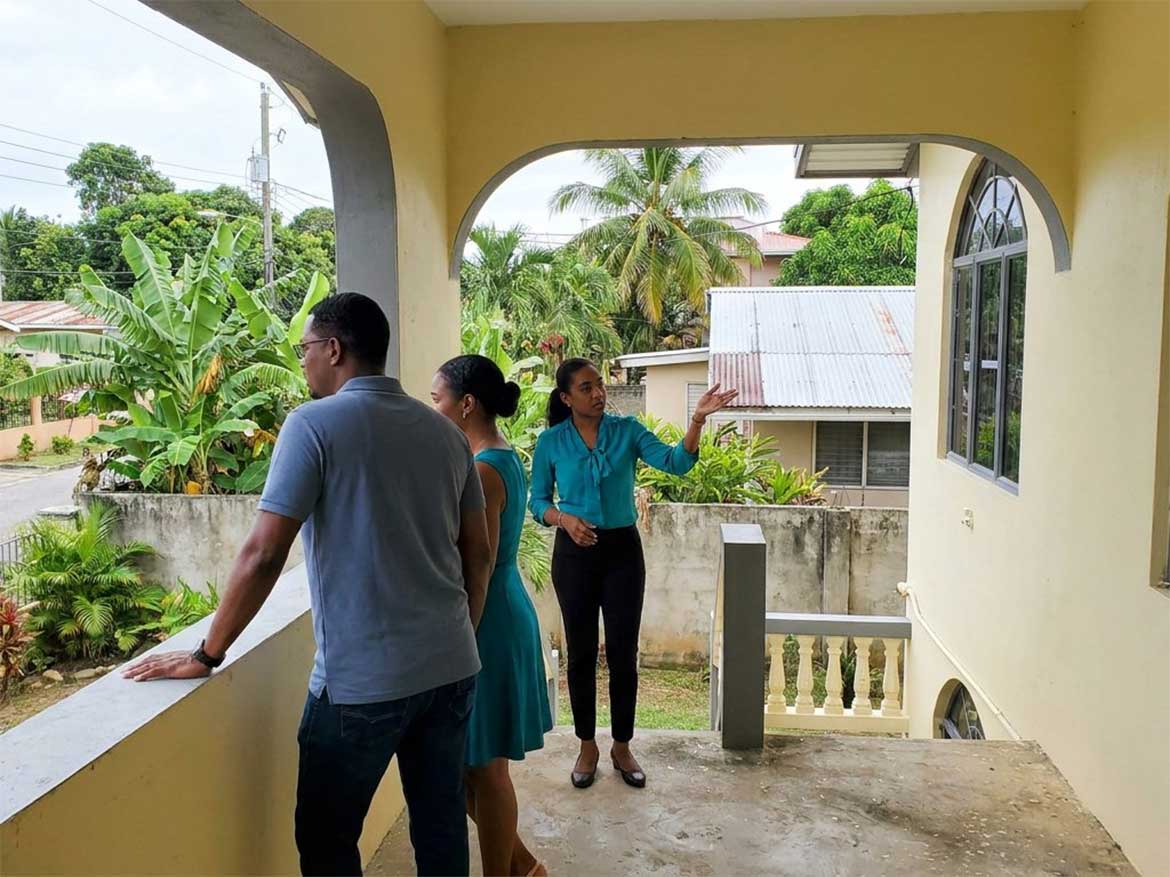
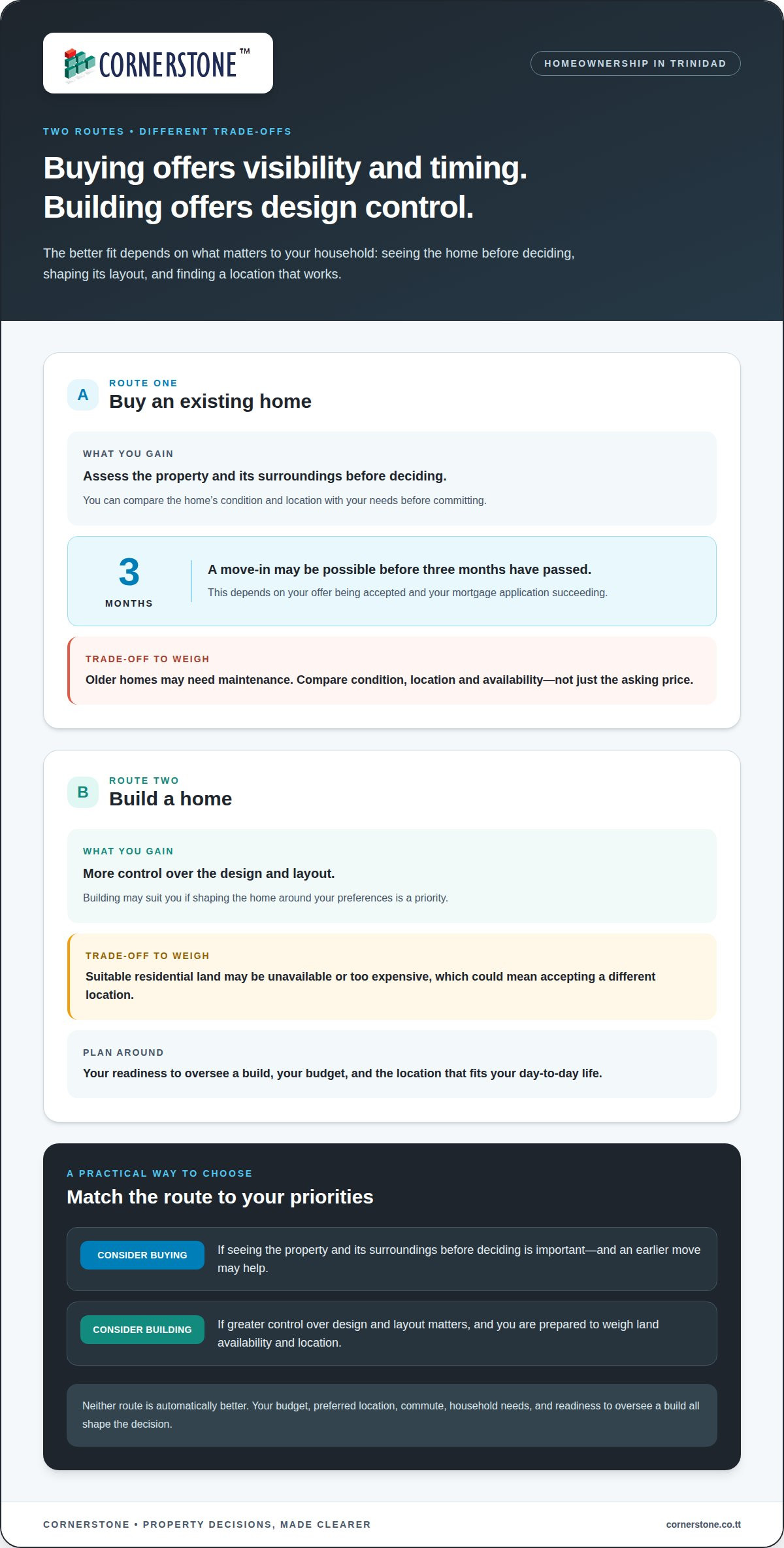
Building isn’t automatically the better route to the home you want. How to buy a house in Trinidad starts with your priorities: an existing home lets you assess the property and its surroundings before deciding, while building gives you more control over the design and layout. If your offer is accepted and your mortgage application succeeds, an existing home may let you move in before three months have passed.
It’s a significant decision, and the right choice depends on more than the house itself. Your budget, preferred location, commute, and readiness to oversee a build all shape what makes sense for you.
This guide compares buying with building, explains how to prepare for mortgage pre-approval, and covers researching homes and neighbourhoods. You’ll also learn how to weigh commute times against the features you want, so you can focus on a home and location that suit your day-to-day life.
Key Takeaways
- Get mortgage pre-approval, then set a comfortable spending limit based on your income, debts, and monthly commitments.
- Compare homes by condition, location, and availability, not just by asking price.
- Weigh commute time against the areas and daily conveniences that matter most to your household.
- Choose between buying and building by balancing move-in timing and the chance to inspect a home against control over its design and layout.
Table of Contents
- Mortgage pre-approval
- Researching location, market conditions, and home availability
- Choosing a location and considering commute times
- Comparing buying and building
- Cornerstone: Property sales
Mortgage pre-approval
For homeownership in Trinidad and Tobago, start with a lender’s financial assessment before searching. It can help establish a borrowing range, but pre-approval is not a final loan decision.
- Assess affordability, savings, and mortgage costs. Calculate your monthly income, long-term debt, household expenses, and savings before deciding what you can afford. A lender may also assess your job, salary, age, assets, loans, and other financial commitments. If possible, aim to save 15-20% of your monthly income as you prepare for homeownership. Keep a separate reserve for mortgage-related expenses, and don’t treat the maximum amount approved as a comfortable budget.
- Set a budget and explore mortgage financing. Set a spending limit that leaves room for regular expenses after the mortgage payment. Then seek pre-approval: a lender reviews your income and other information to estimate how much you may borrow. If you’re applying with a spouse or family member, you can have your finances assessed together. Use the result to guide your property search, not as a reason to stretch your budget to the maximum approved amount.
- Compare mortgage structures and financing options. Compare interest rates, repayment terms, and conditions across lenders before choosing a mortgage. In Trinidad and Tobago, rates typically range from 4% to 8% APR, depending on the institution. Some retail banks offer 100% financing, while traditional banks may require a 10-20% down payment. These options affect the savings you need upfront and your borrowing costs, so compare the full terms rather than the rate alone.
- Prepare application documents and processing costs. Gather records about the factors lenders assess, including your employment, salary, savings, assets, loans, and monthly expenses. If applying with a spouse or family member, organize both applicants’ financial details. Ask for a breakdown of any application or processing charges and include quoted costs in your cash plan. Prequalification is only an estimate, not a guarantee of approval, so keep your budget grounded in your own finances.
Researching location, market conditions, and home availability
To plan how to buy a house in Trinidad, compare available homes against your budget, daily needs, and preferred communities. Look beyond asking prices to the property’s condition, ownership details, and location.
- If you are not a Trinidad and Tobago national, check how the location affects your purchase. If you are considering property in Tobago, check whether any additional requirements apply to your purchase. Include this step in your planning if you are considering property there.
- Before making an offer, have an attorney review the title and sale documents. Ask them to check ownership records, possible liens, and relevant planning approvals. Confirm that the seller has authority to sell, and keep the offer terms and payment arrangements in writing. These steps can help reduce the risk of disputes or misleading claims.
- Review home prices and affordability. Compare similar properties in the same area by size, age, condition, and features. Asking prices alone may not reflect maintenance costs or the value of a particular location. If you’re weighing buying against renting, compare the purchase price with the rent for a similar home. Use these comparisons to judge whether the property fits your budget and plans.
- Choose a home and neighborhood. Shortlist homes based on bedrooms, bathrooms, lot size, condition, and access to work, schools, and shopping. With an existing home, you can assess the property and its surroundings before deciding; building offers more control over design. When considering how to buy a house in Trinidad, weigh these trade-offs against availability and your household’s needs. Older homes may also need maintenance.
- As you compare options, separate essential features from those you can compromise on. Suitable residential land may be unavailable or too expensive, so building could mean accepting a different location. Keep listing details and viewing notes, then assess each home against the same criteria before deciding which to pursue.
DownloadFeedback & RecreateDelete
Choosing a location and considering commute times
Compare your regular journeys in each neighbourhood before choosing a property. A manageable commute can shape daily life as much as the home itself.
- Compare locations and commute timesMap your route to work, school, and regular appointments, then compare the time each location adds to your day. A commute from South Trinidad to Port of Spain can take more than 2 hours each way. Consider that journey carefully if you travel regularly, and weigh it against the benefits of a particular area. Assess the route at the times you expect to travel, not only its distance on a map.
- Shortlist neighbourhoods that suit your routine and priorities. For each, note access to work, schools, shopping, and other places you visit often. A property may look appealing, but its location could make everyday travel difficult. Consider your full routine, including how often you make each trip, before deciding whether the location works for your household.
- Select a suitable location and propertyMatch the home’s condition, size, and layout to your plans, then assess whether its surroundings support them. Consider construction quality, age, lot size, bedrooms, bathrooms, nearby services, and the commute. For an investment property, weigh its location and potential appreciation alongside your own needs. Judge a home by practical fit, not appearance alone.
- Choose a real estate agent who understands the market and the neighbourhoods on your shortlist. An agent can help identify properties in your price range, explain current market activity, and share information about availability and timing. They can also help clarify your housing needs and prepare or negotiate offers. Discuss commute priorities early so property suggestions reflect your day-to-day plans.
Comparing buying and building
Compare the time, control, and work involved in each route. Your income, lifestyle, and plans for homeownership can help determine which suits you.
- Consider what you gain by purchasing an existing home. You can view the property and neighbourhood before deciding, and an accepted offer with a successful mortgage application may allow you to move in before three months have passed. For an older home, account for likely maintenance or renovation needs, not just its current condition.
- Consider building if control over design and layout matters most. First, assess whether suitable land is available in your preferred location. Residential land there may be unavailable or too expensive, meaning you could need to compromise on location. Building also requires close attention to progress, as construction can involve ongoing oversight at each stage.
- Understand the financing steps before choosing to build. With bridging finance, funds are released only after each stage is complete, so you may need to cover cost overruns. Building-plan approvals must be obtained before construction funds are released. A Contractors’ All Risks Insurance Policy is required for Bridge Financing arrangements to take effect, and you should monitor the work closely.
- Compare the deposit and documentation requirements with your available savings. A typical property offer includes a 10% deposit, while mortgage loans for newly constructed homes require a valid completion certificate for homes up to 4 years after construction. If buying suits your plans, explore homes for sale to compare available properties with the location and timing you need.
Cornerstone: Property sales
Cornerstone can support your search through its property sales listings. Once you have a budget and a clearer idea of your preferred location, explore available homes and compare them against your household’s needs.
If you’re still weighing your options, Cornerstone also offers no-obligation property market opinions. These provide a market perspective, not a licensed property valuation. If buying isn’t the right fit yet, Cornerstone’s rental listings can help you consider another option while you plan.
For a grounded next step, browse Cornerstone property sales or contact Cornerstone to discuss your property search.
Choose the next step that fits your plans
Turn your priorities into a practical decision rule. Write down what must work in daily life, where you can compromise, and which trade-offs would make a home unsuitable. This gives you a consistent way to compare options without being swayed by one attractive feature.
If you’re still deciding how to buy a house in Trinidad, use your shortlist to test your priorities against actual properties and locations. Consider whether a home supports the routine you want, not just the excitement of finding it. Your answer may change as household plans shift, so keep your criteria simple enough to revisit.
Cornerstone can be a local point of contact as you shape the next stage of your search. Contact Cornerstone to discuss your plans, and take the next step at a pace that feels right for you.
Frequently Asked Questions
Freehold or Leasehold?
Freehold and leasehold differ in how long you hold an interest in the property. Leasehold terms in Trinidad and Tobago can include 30 years, 99 years, or 999 years, so read the lease for its expiry date, conditions, and any fees. Freehold properties may be registered under the Real Property Ordinance system or the Old Law deed system. Have an attorney review the title documents before purchase.
What About Mortgages?
A mortgage lets you finance a property purchase through a lender, with repayment terms shaped by your finances and the property. Lenders assess factors such as income, existing debts, savings, assets, and regular expenses. If you’re applying with a spouse or family member, a shared financial assessment can show the household’s overall position. Compare repayment terms and conditions, not just the interest rate, before deciding what fits.
When Should You Start Thinking About Homeownership?
Start when homeownership becomes a real goal, even if you aren’t ready to purchase immediately. Consider whether your income, savings, and plans support a long-term commitment. Buying tends to suit people prepared to stay long enough to build equity. Renting remains a reasonable choice if ownership isn’t a current priority or your finances aren’t ready for the commitment.
What are the steps to buy a house in Trinidad and Tobago?
Begin by assessing your finances and deciding which property and location suit your needs. Research homes, view suitable options, and make a written offer with clear terms. Have an attorney review the offer before signing. Once the seller accepts and signs, the agreement becomes binding; it should set out the parties’ responsibilities, cancellation and deposit-refund conditions, and a closing date. Then complete the mortgage and transaction requirements.
How much does a house cost in Trinidad and Tobago by area?
There isn’t one price for each area: property values depend on location, type, size, condition, and demand. More desirable areas can cost substantially more than less sought-after ones, and comparable homes may differ in land size or upkeep. To estimate costs, compare recent listings for similar properties and consider how repairs or maintenance could affect the total amount you need.
What additional costs and taxes apply when buying property in Trinidad and Tobago?
Plan for expenses beyond the purchase price. Legal fees are typically 1% to 2% of the purchase price, stamp duty ranges from 0% to 7.5% depending on property value, and valuation fees are typically 0.25% of property value plus VAT. Property taxes are due annually. Ask for a transaction cost breakdown early so you can plan for both closing expenses and ongoing ownership costs.